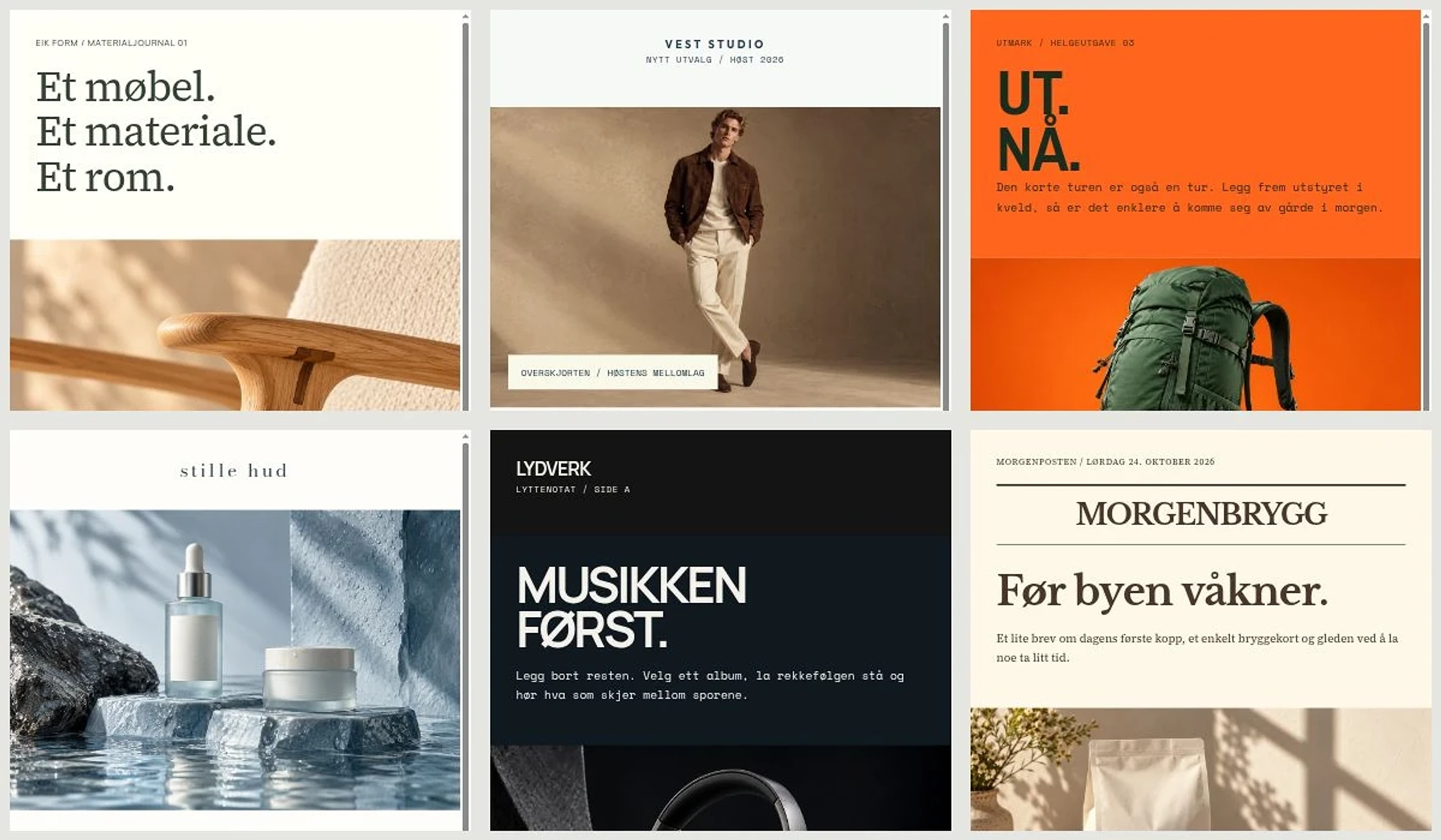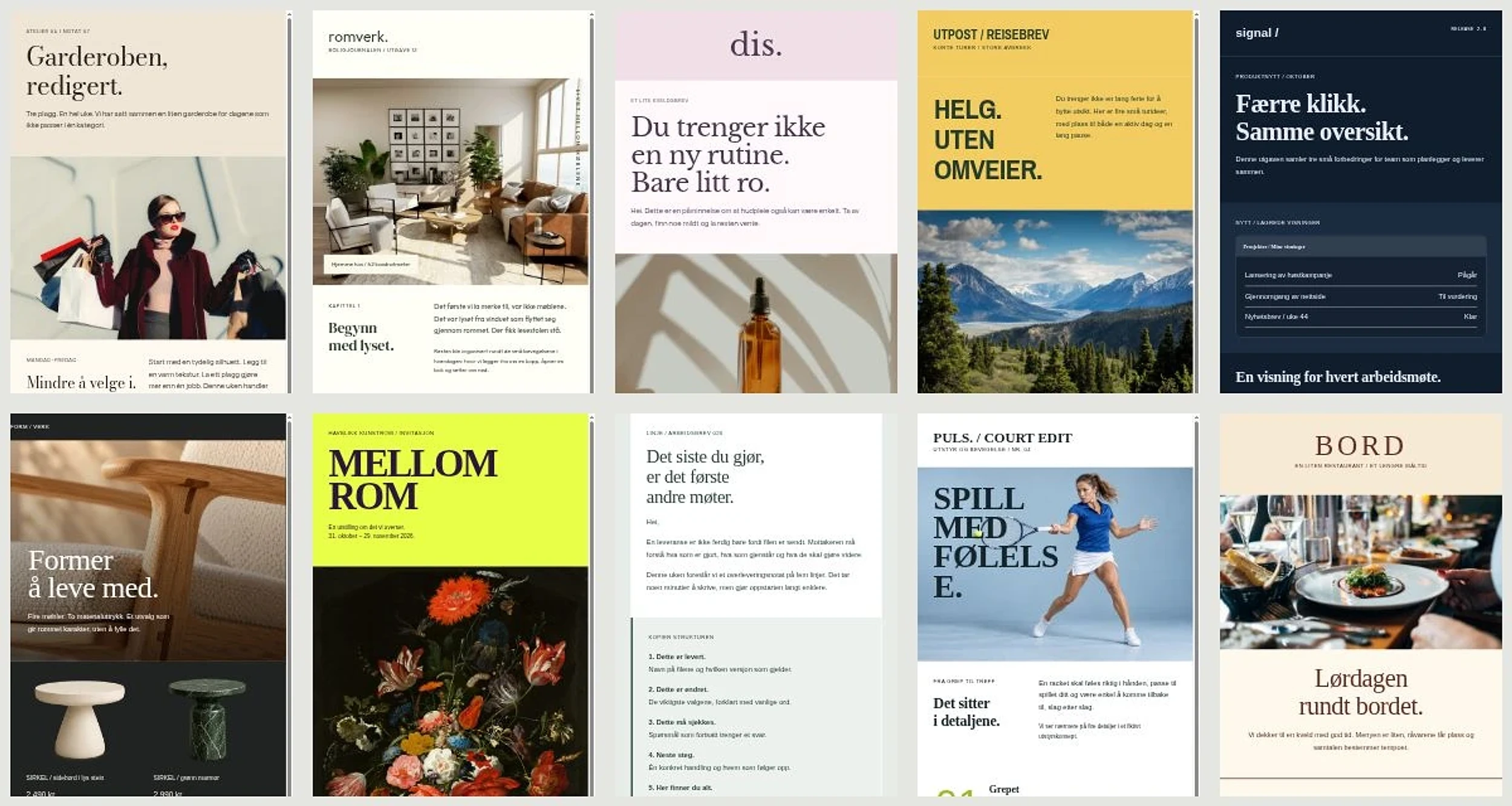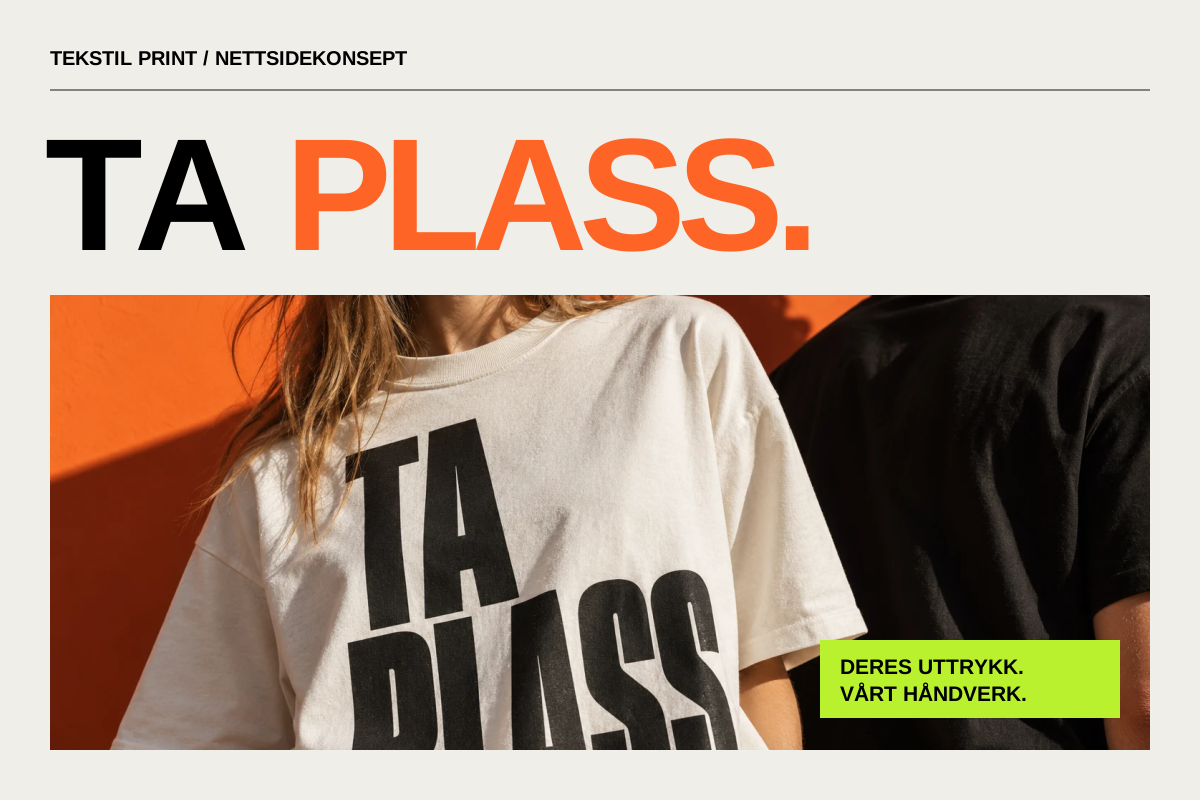
A clothing store, a building-materials supplier and a company selling to other businesses may all need websites, campaigns and content. Their needs nevertheless differ.
Customers assess products differently, sales processes vary in length and the information determining a purchase differs between industries. That should affect both design and content work.
Fashion and retail: the product carries much of the communication
In fashion and other visually driven retail, the product is often the strongest communication tool.
Photography, styling, campaign material and presentation take substantial space. Sizes, variants, prices, availability and return terms also need to be easy to find.
Typical priorities include product photography and video, seasonal campaigns, social media and email content, good product pages and fast publishing when the range changes.
A strong visual identity cannot compensate for unclear sizes, weak filters or incomplete product information. Branding and e-commerce need to work together.
Building materials: information is part of the product
The information needs are different in the building-materials industry.
Two products may look almost identical but have different dimensions, technical properties, approvals or applications. NOBB, the Norwegian Building Materials Database, includes technical properties, logistics data, documentation and product images. Byggtjeneste describes standardised product data as a central part of the industry's information flow.
Design should therefore prioritise structure: readable tables, useful filters, clear categories, documentation near the product and consistent variant names.
A quieter solution may be better than a more visually spectacular one if it makes finding the right item faster.
B2B and services: explanation comes before the campaign
Businesses selling complex services or technical solutions often have a longer sales process. Customers need time to understand what the business provides, who the solution fits, how the process works and why the supplier is credible.
A clear website, useful customer cases and precise sales material may then matter more than frequent social-media publishing.
For some B2B businesses, one carefully prepared presentation can be more useful than several weeks of generic content.
Content should follow the purchasing process
The pace of content production also varies.
A clothing store may need frequent updates. A manufacturer may gain more value from product sheets, documentation and a few substantial specialist articles. A service business may need cases and explanations supporting sales conversations.
Before making a publishing plan, it is therefore more useful to map what customers are trying to understand, what needs documenting, which alternatives they compare and what information is missing before the next step.
Channels and regulations set boundaries
Marketing is also affected by the channel, audience and regulations. The Norwegian Consumer Authority requires clear advertising disclosure on social media, among other things. Digdir also refers to accessibility requirements for private websites.
Creative solutions therefore need to work within both user needs and the practical conditions of the business.
Three questions before design work begins
A useful starting point is to clarify:
- What is being sold: a visual product, a technical product or a service?
- How do customers choose: visually, by comparing specifications or through a longer assessment?
- What does the business need to manage internally: frequent publishing, product data, documentation or sales material?
Industries never fit perfectly into fixed categories. But design becomes more precise when it starts with how the market actually works, rather than a standard recipe applied to everyone.