What should a new colleague be able to do?
A new salesperson needs to understand the products and how work moves through the business. Who handles an enquiry? How do we prepare a quote? Where do we record an order? When should a manager step in?
A web learning portal can organise this around the job. It might cover a role, a profession or a set of tasks. The approach can serve new employees, apprentices and placement students, with suitable content and supervision for each group.
Learning needs people as well as content
CIPD describes induction as an opportunity to give new employees the knowledge and support they need in their role. A portal can contribute alongside practical training and conversations with a supervisor.
Nielsen Norman Group explains why visible cues are easier to use than information recalled from memory. My application of that principle is to place explanations and examples beside the task, where a new colleague can consult them while working.
Example: from a sales enquiry to follow-up
For a sales team, I would suggest a sequence covering:
- Products and customers: Which needs do we meet, and what can we promise? - First conversation: What should we ask and record? - Quotes: How do we choose a solution, use the pricing template and get approval? - Orders and handovers: Who needs which information? - Follow-up: How do we handle questions, problems and escalations?
Each part could include a short explanation, a worked example and an exercise. A fictional customer might request a discount and urgent delivery. The learner prepares a response and discusses the reasoning with a supervisor. This is a proposed training scenario, not a completed client assignment.
Two personal projects illustrate the approach
In UX Learning, I organised subject material into chapters and lessons, with explanations of terminology. It illustrates how learning within a subject can be structured.
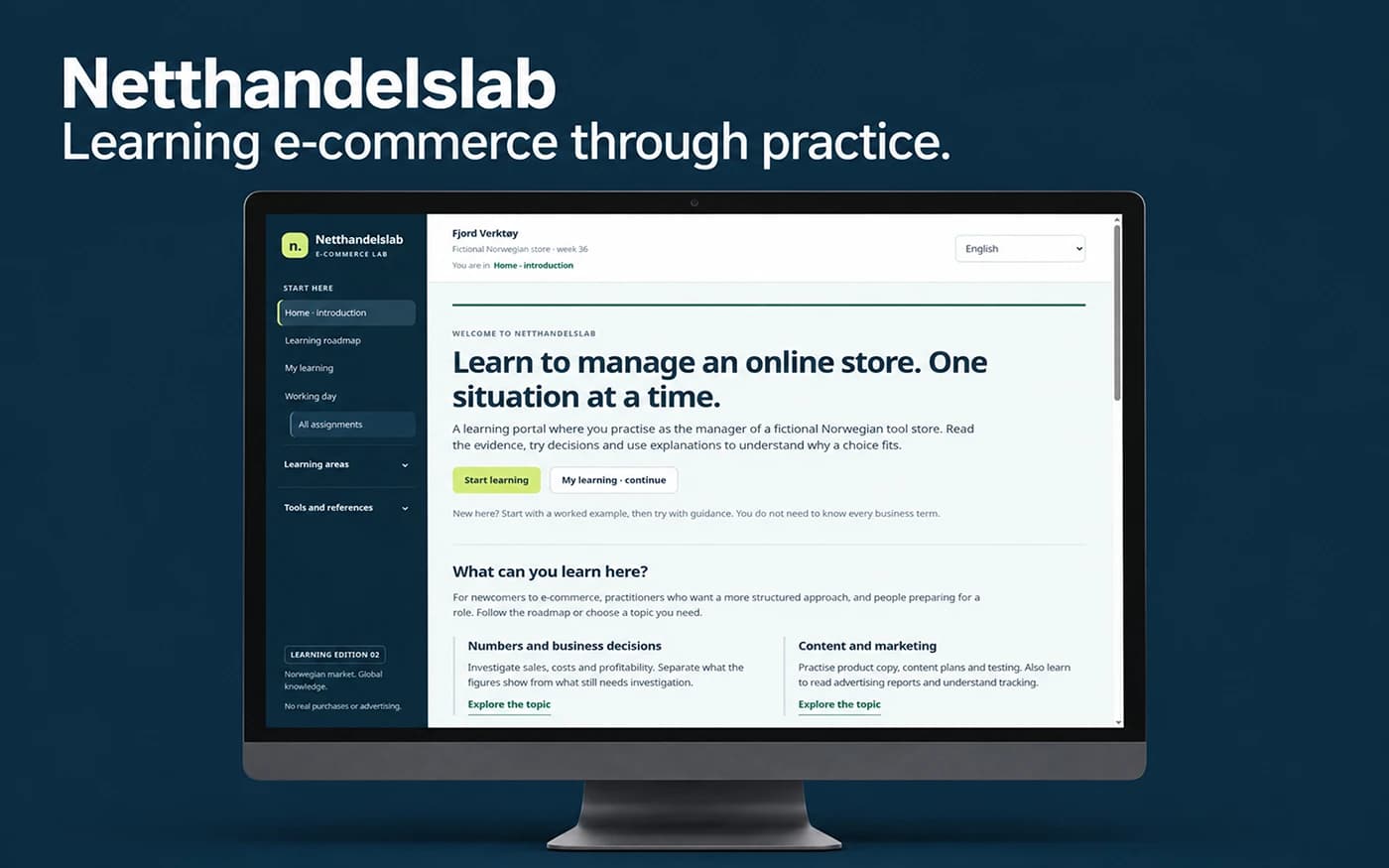
Netthandelslab uses a fictional online store to practise operations and decisions. It is a working, self-initiated prototype, not an employee training system delivered to a client.
Both are personal learning projects. They illustrate design and structure; I have not established an effect on employee performance or learning outcomes.
A practical option for medium-sized businesses too
A professional learning portal does not have to be a large corporate project. A medium-sized business can begin with one role, a limited set of material and a solution that fits its existing tools. Clear structure, useful exercises and maintained content matter more than a long feature list at launch.
Scope and cost depend on content preparation, access requirements and connections to other systems. My recommendation is to address one specific training need first, then expand based on experience.
How I would start with a business
Choose one role and a few common tasks. Your subject experts explain the correct working methods and approve the content. I can help with structure, user journeys, interface design and web development.
The first version could be small: a starting point, a few modules, examples and a way to find help. Sign-in, saved progress, languages and a supervisor view should follow actual needs. If you already have a learning system, we should first consider how to use it.
Try the material with people from the intended audience. Can they perform the task, explain their decisions and find help? A completed lesson alone does not establish competence. Agree who will maintain the content when routines change.
Does your team have a job that takes time to learn?
Tell me which role you want to support and which tasks generate the most questions. We can work out a manageable first version.
Get in touch